
If you’re facing scoliosis surgery, you’re about to make one of the most important healthcare decisions of your life. The surgeon you choose will literally reshape your spine. You might assume any experienced spine surgeon can handle scoliosis surgery, but that’s not the case. Scoliosis correction requires highly specialized training and expertise that goes far beyond general spine procedures. Choosing the best scoliosis specialist, rather than a general spine surgeon, can mean the difference between excellent correction and a result that requires revision surgery later on.
Understanding When You Need a Scoliosis Surgery
Surgery typically becomes necessary when your spinal curve progresses beyond 45-50 degrees and when conservative treatments like scoliosis bracing have failed to stop progression, or when your curve causes significant pain, breathing difficulties, or visible deformity impacting daily life.
Why can’t any spine surgeon handle this? General spine surgeons primarily treat herniated discs, stenosis, and degenerative disc disease—procedures involving one or two spinal levels with straightforward approaches. Scoliosis surgery is entirely different. Scoliosis correction requires three-dimensional spinal correction. Your spine doesn’t just curve side-to-side—it rotates and shifts in multiple planes simultaneously. A scoliosis specialist addresses these unique scenarios, through a background with advanced training in spinal deformities that most general spine surgeons don’t have.
Many patients wonder whether an orthopedic surgeon or neurosurgeon is better for back surgery. Both can perform spinal surgery, but what type of surgeon is best for back surgery depends entirely on their subspecialty training. You want a spine surgeon with scoliosis and spinal deformity specialties.
The Non-Negotiable Credentials for Your Scoliosis Surgeon
Your Scoliosis Surgeons’ Education & Certification
Scoliosis surgeon qualifications begin with board certification. Your surgeon should be board-certified by either the American Board of Orthopaedic Surgery (ABOS) or the American Board of Neurological Surgery (ABNS). Beyond basic certification, fellowship training specifically in spinal deformity is essential. This additional specialized training focuses exclusively on complex spinal curves.
Your Scoliosis Surgeons’ Experience
The number of scoliosis surgeries a surgeon does a year matters. Higher-volume surgeons consistently demonstrate better outcomes and lower complication rates. Look for surgeons who have dedicated years specifically to scoliosis. When you compare surgeons, their annual case volume for your specific condition matters more than their total years in practice.
Your Scoliosis Surgeons’ Technical Capabilities
Your surgeon should be proficient in multiple surgical approaches such as posterior and anterior spinal fusion, and minimally invasive techniques. Experience with modern technology like computer navigation, robotic assistance, and 3D surgical planning indicates they’re current with evolving techniques.
What to Look for in Your Scoliosis Surgery Consultations
Your consultation can reveal as much about a surgeon’s quality as their credentials do. Pay close attention to how they interact with you. A common concern is whether a spine surgeon will always recommend surgery—the answer is no. A skilled specialist should discuss all treatment options and honestly explain when conservative approaches might still be viable before recommending surgical intervention.
What You Want to See:
The spine surgeon should clearly explain why their recommended approach specifically fits your scoliosis curve pattern, severity, and lifestyle. They discuss realistic outcomes, both best-case and potential complications, along with honest recovery timelines. They answer your questions patiently without watching the clock or making you feel rushed. When asked, they provide specific information for cases like yours, including their complication and success rates.
What to Watch Out For:
Be wary of surgeons who push immediately toward surgery without exploring or explaining why conservative treatments won’t/haven’t worked. One-size-fits-all recommendations that don’t account for your unique curve characteristics are concerning. If they dismiss your questions, seem irritated by inquiries, or can’t articulate the rationale behind their surgical plan, walk away. Pressure tactics like claiming you must decide immediately or creating false urgency, are red flags. Trust your instincts: if something feels off during the consultation, it probably is.
Questions to Ask Your Scoliosis Surgeon:
Before making your decision, prepare these essential questions to ask scoliosis surgeon candidates. Use this surgical checklist to get started:
- How many scoliosis surgeries do you perform yearly?
- How many surgical scoliosis cases like mine specifically do you perform yearly?
- What are your surgical complications and revision rates?
- Why this surgical approach for my scoliosis curve?
- What alternatives did you consider for my scoliosis condition?
- What does week-by-week recovery look like?
- What happens if we don’t get the desired result?
Doing Your Scoliosis Specialist Research Online
Online reviews, such as on Google, from other patients can offer valuable insights, but read them strategically. Don’t just focus on comments about bedside manner. Look for outcome-specific feedback—did patients mention pain relief, improved mobility, or correction results? Recent reviews (within the past 1-2 years) matter more than older ones, as they reflect current practices and team dynamics. Remember that negative reviews are often overrepresented since dissatisfied patients are more motivated to post. Look for patterns across multiple reviews rather than fixating on isolated complaints.
Practical Considerations for Choosing a Scoliosis Specialist
Verify insurance coverage before you’re emotionally invested in a surgeon. Call both the surgeon’s office and your insurance company to see they’re in-network or out-of-network (out-of-network should not rule them out – you want the right scoliosis surgeon) and understand pre-authorization requirements.
Consider travel logistics carefully—you’ll need multiple follow-up appointments over several years, not just the surgery itself.
Understand the time commitment, including recovery and beyond: surgery day is just the beginning.
Choosing the Right Specialist for Scoliosis Surgery
After gathering all this information, how to pick the right surgeon comes down to balancing multiple factors. The ideal scoliosis surgeon combines exceptional credentials and extensive experience with a communication style that puts you at ease. The most important factor in selecting your surgeon is technical excellence, but if you can’t communicate openly with your surgeon or feel dismissed, that relationship won’t serve you well through recovery.
Trust both your instincts and the data you’ve collected. If a surgeon has outstanding credentials but something feels off during your consultation, that’s valid. Conversely, don’t choose someone based solely on personality if their experience doesn’t match your needs.
Take the time you need to feel confident, but don’t delay unnecessarily as progressive curves worsen over time.
When choosing your scoliosis surgeon, you deserve someone who’s both technically excellent and the right fit for your unique situation. The time you invest researching credentials, asking questions, and verifying experience directly protects your long-term outcome and quality of life.
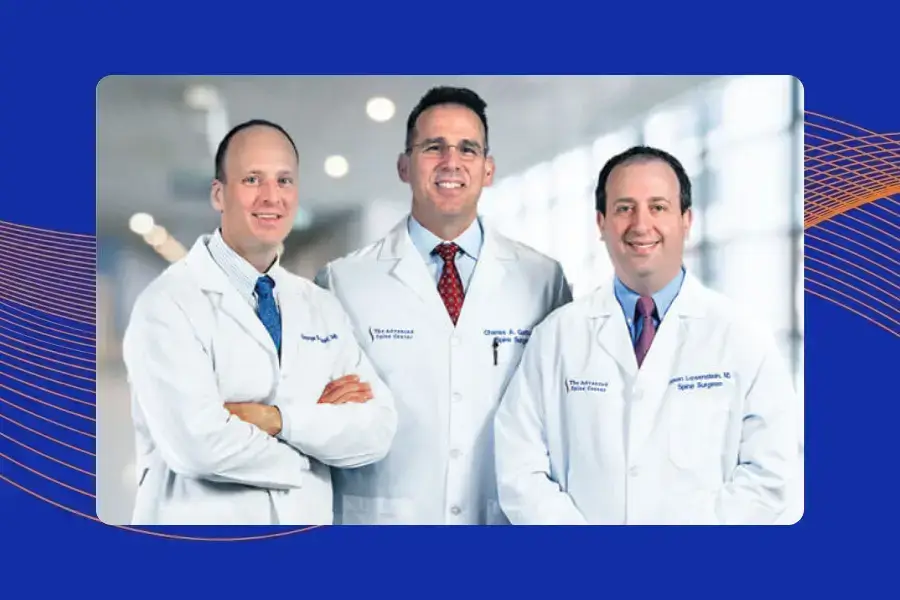
The Advanced Spine Center team specializes in complex scoliosis correction, with decades of combined experience treating scoliosis, degenerative curves, and revision cases. Our surgeons use the latest surgical techniques and technology to achieve optimal spinal alignment while preserving mobility. Schedule a consultation today to discuss your specific case, review your imaging, and explore your treatment options with a true scoliosis specialist.