
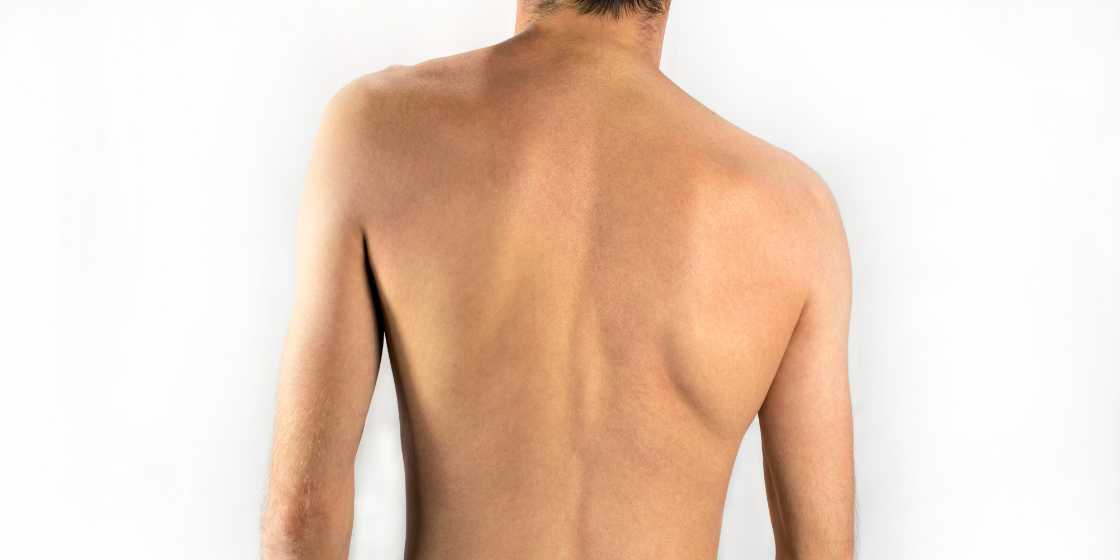
People often associate scoliosis with children and adolescents. Yet many adults first notice a curve in their 50s or later, either because a childhood curve has started to progress or because wear and tear on the spine has created a new one. A back that has grown stiffer, a posture that has shifted, or walks that feel shorter than they used to are often the first clues.
Our spine specialists in Morristown, Bridgewater and Rockaway, New Jersey, treat adult scoliosis at every stage, and patients who come in after 50 tend to describe the same changes.
Why Scoliosis in Adults Over 50 Develops or Gets Worse
Adult idiopathic scoliosis may be a continued progression of adolescent idiopathic scoliosis. Without proper diagnosis, monitoring, and treatment, larger scoliotic curves (in excess of 50 degrees) may only worsen as a patient ages.
Adult degenerative scoliosis can occur because of wear and tear on the spine. As we age, the discs protecting the vertebrae tend to dry out and lose shape, and when they collapse unevenly, one side of the spine settles lower than the other. Osteoarthritis in the facet joints adds to the shift. Arthritis causes the cartilage protecting the joints to break down. This may lead to bone spurs or other structural abnormalities that alter spinal alignment. Degenerative scoliosis usually occurs in the lumbar (or lower back) region.
Bone density plays a part too. After menopause in particular, osteoporosis weakens the vertebrae, and small compression fractures can deepen a curve or tip the spine forward.
How Scoliosis Symptoms in Adults Change in Your 50s, 60s and 70s
No 2 curves follow the same path, but the symptoms our spine specialists hear about tend to shift with each decade.
Scoliosis Symptoms in Your 50s
Stiffness and an ache in the lower back usually come first, often worse at the end of the day or after a long stretch of standing. Posture changes show up around the same time, like a belt that sits crooked or a shirt hem that hangs lower on one side.
Scoliosis Symptoms in Your 60s
As the discs narrow and nerves get crowded, leg symptoms become more common: cramping or numbness in the legs, shooting pain in the legs, and legs that feel heavy after a few minutes on your feet. This is often spinal stenosis developing alongside the curve, and sitting or leaning forward usually eases it.
Scoliosis Symptoms in Your 70s and Beyond
Walking tolerance becomes the main complaint for many people, such as needing to lean on a shopping cart to finish the grocery run. A forward or sideways lean, loss of height, and tired back muscles that work all day to hold you upright are also common.
Recognizing Mild Scoliosis in Adults Over 50
A small curve on an imaging report doesn’t predict how you’ll feel. Some adults with a 15-degree curve have no pain at all, while others with a similar curve have significant leg symptoms because of stenosis or a slipped vertebra at the same level. What matters most is whether the curve is changing and whether symptoms limit your day.
Some degenerative curves hold steady for years, while others progress 1 to 3 degrees a year. A baseline standing scan, compared with one taken a year or 2 later, shows which pattern you’re in. Not sure your symptoms point to scoliosis? Our 2 Minute Scoliosis Quiz is a quick first step.
How Age Shapes Treatment for Scoliosis in Adults Over 50
Most adults with scoliosis don’t need surgery. After 50, treatment targets whatever is causing the pain rather than the curve on its own, so 2 people with the same curve often leave with very different plans. A curve with stenosis and leg pain calls for a different approach than a larger curve with only mild back stiffness.
When pain or walking limits keep worsening despite nonsurgical care, surgery comes into the conversation, and age alone doesn’t rule it out. Bone quality, heart and lung health, and your personal goals shape the decision. Surgery can restore spinal balance and reduce or eliminate symptoms.
Frequently Asked Questions About Scoliosis in Adults Over 50
How will scoliosis affect my daily life after 50?
For most people, the biggest change is standing and walking tolerance. Errands, cooking and long walks get harder before work or travel does. Shorter walking distance is also one of the early signs of degenerative scoliosis, and treatment usually brings that tolerance back.
What are the limits of living with scoliosis?
Heavy lifting, long periods on your feet and high-impact sports tend to aggravate a painful curve. Walking, swimming, cycling and core work are well tolerated and help keep symptoms in check.
Does scoliosis get worse after 50?
It can. Curves over 50 degrees and degenerative curves tend to progress slowly with age, and bone loss speeds that up. Our spine specialists set your monitoring schedule based on your curve and symptoms rather than a fixed timetable.
Scoliosis Care for Adults Over 50 in Morristown, Bridgewater and Rockaway
The Advanced Spine Center can help. Dr. Jason E. Lowenstein is a board certified, fellowship trained Adult and Pediatric Spine and Scoliosis surgeon. His dedication to treating spinal deformities, like adult scoliosis, has earned him numerous awards in New Jersey as well as nationally.
If your back, posture or walking has changed and you’re not sure why, bring whatever imaging you have. We’ll take a standing scan if you need one and give you a straight answer about your curve. Request an appointment online today to get started at the Advanced Spine Center.
Updated November 2026.