
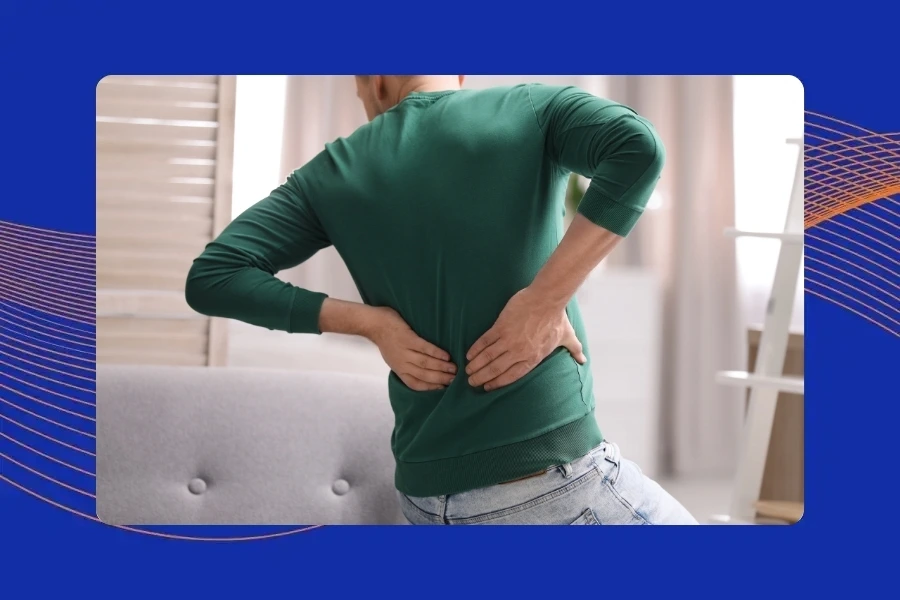
At-home scoliosis treatment is often exactly the right place to start. You’ve looked into the scoliosis exercises, you’re watching your posture, and you’re hoping that with enough consistency you can keep your curve stable and your pain manageable. That approach is reasonable, and for many people with mild scoliosis, it holds. Conservative management isn’t a fallback plan. It’s often exactly the right place to start.
Scoliosis doesn’t stay the same for everyone. Some curves stabilize for years. Others progress slowly enough that patients don’t notice until the gap between what they’re managing and what they actually need has expanded beyond what at-home scoliosis treatment can do.
What Can You Do at Home to Relieve Scoliosis Pain?
Pain from scoliosis typically comes from muscle strain, nerve irritation, and the cumulative load your spine carries through the day. Those sources are distinct, and they respond to different things.
What works for muscle tightness won’t necessarily help with nerve-related discomfort, and neither addresses the postural strain that builds across a full day of sitting, standing, and moving. That’s worth understanding before reaching for a single fix, because most people who feel like they’ve “tried everything” have actually tried several things aimed at the same problem. Addressing each source separately, and consistently, is where real relief comes from.
Movement Matters, But Not All Movement Is Equal
General exercise is good for your spine. Walking, swimming, and low-impact activity keep the supporting muscles active and reduce the stiffness that builds when patients start moving less to avoid pain. For anyone managing a curved spine, though, general fitness and scoliosis-specific therapeutic movement are not the same thing. Treating them as interchangeable is one of the more common mistakes people make. The muscles on one side of your back are chronically overworked while those on the other are underused, and a generic core routine often reinforces that imbalance rather than correcting it.
Scoliosis-specific exercises are designed around that asymmetry. Work with a physical therapist experienced in scoliosis first, learn the right mechanics, and build a home routine from that foundation. What you can do at home to relieve scoliosis pain is meaningful, but it works better when it starts with the right map.
Heat, Ice, and Daily Scoliosis Pain Management
Heat is most effective for chronic discomfort, the kind that tightens through the day and settles into the paraspinal muscles. Applied before movement or stretching, it loosens the tissue and makes therapeutic exercise more productive. A heating pad for 15 to 20 minutes before your scoliosis exercises at home can meaningfully improve how that movement feels and how much benefit you get from it.
Ice serves a different purpose. When pain is acute, a flare-up after a long day or inflammation around an irritated joint, cold reduces inflammatory response and numbs the area.
The general rule: heat for chronic stiffness, ice for acute pain. For ongoing scoliosis pain relief at home, alternating between the two at the right times is more effective than relying on either alone. Neither addresses the underlying curve like a scoliosis surgery can, but both can help to reduce the daily friction that makes movement harder than it needs to be.
Posture, Sleep Position, and Reducing Daily Scoliosis Strain
How you sit, sleep, and carry weight adds up to a continuous mechanical load on a spine already working harder than it should. Sitting with lumbar support, keeping your screen at eye level, and standing briefly every 45 minutes does more than most people expect. A pillow between the knees at night keeps the hips level and reduces rotational stress on the lumbar spine. Carrying weight unevenly aggravates existing imbalances over time. These adjustments don’t fix the curve like a scoliosis surgery can, but they reduce how much it costs you daily.
Can Exercise Stop Scoliosis From Getting Worse?
For people working to prevent scoliosis from getting worse, with curves generally under 25 to 30 degrees, structured physical activity plays a meaningful role. Strong, balanced muscles mean the spine carries less compensatory load, which translates to less pain, better posture, and in some cases a slower rate of progression. It works best alongside regular monitoring to verify what the curve is actually doing.
However, exercise alone cannot correct a scoliosis curve. A spinal curve is a structural reality. The vertebrae are rotated and positioned in a pattern that has become load-bearing, and no exercise reorganizes bone. Once a curve reaches approximately 40 degrees or beyond, the goal shifts from correction to compensation. Keeping the surrounding muscles strong is still valuable, but adult scoliosis that continues to progress despite conservative efforts isn’t a failure of commitment. It’s a mechanical reality that exercise alone isn’t equipped to resolve. Scoliosis surgery can produce better outcomes for patients than exercise alone.
Signs Your Scoliosis Pain Has Outgrown At-Home Treatment
How do you know when scoliosis pain requires surgery? The honest answer isn’t a single number on an imaging report. It’s a pattern. Pain that has stopped responding to conservative options or medication is usually the first signal. When interventions that used to work begin to be less effective, it can be a sign that your scoliosis has progressed beyond what at-home care can do.
Leg pain, numbness, or tingling down into one leg more than the other points to nerve compression rather than muscular strain, and that requires clinical evaluation. Curve progression on imaging matters even when pain hasn’t worsened dramatically, because it changes what options are available. And when spinal deformity begins to govern your day, when walking a reasonable distance, sitting through a meal, or sleeping without disruption has become something you manage rather than something you do, that’s a signal that you need more impactful scoliosis treatment options.
A Surgical Consultation Is Information, Not a Commitment
Conservative scoliosis treatment deserves credit for what it does well. For many people, it manages symptoms, slows progression, and buys meaningful time. But when a scoliosis curve has moved beyond what those methods are designed to handle, staying the course isn’t perseverance. It’s postponing an answer that’s already become clear.
Surgery for advanced scoliosis isn’t a last resort. It’s a different category of intervention entirely, one that addresses the structural reality conservative care was never built to correct. It doesn’t just aim to reduce pain. It can change the trajectory of what daily life looks like going forward.
If you’ve reached the point where at-home scoliosis treatment is managing less and less, that’s worth exploring what other scoliosis treatment options you have. Our team works with patients at every stage of scoliosis, and a consultation is the clearest way to understand your options.