Spinal Stenosis Treatment in New Jersey & New York
Get the best spinal stenosis care from experienced, board-certified spine surgeons who specialize in relieving pressure on the spinal cord and nerves. We offer both conservative and surgical approaches using the latest minimally invasive techniques to help you walk, stand, and move with less pain.

What is Spinal Stenosis?
Spinal stenosis is a narrowing of the spaces inside the spine that puts pressure on the spinal cord or the nerves branching off it. The narrowing most often develops in the lumbar spine (lower back), though it can also occur in the cervical (neck) or thoracic (mid-back) regions. Spinal stenosis becomes more common with age. In the Framingham Study published in The Spine Journal, CT scans found acquired lumbar stenosis in 47.2% of adults aged 60 to 69. The condition is classified by which part of the spine has narrowed:
- Central canal stenosis: Narrowing of the main canal that houses the spinal cord.
- Foraminal stenosis: Narrowing of the openings where nerve roots exit the spine.
- Far lateral stenosis: Narrowing just outside those openings, near the facet joints.
Narrowing on an MRI does not always cause symptoms, and many people with spinal canal stenosis feel fine. Our spinal stenosis specialists in New Jersey and New York match what your imaging shows to the pain you feel day to day, then build a personalized treatment plan around your spinal stenosis symptoms and goals.
Spinal Stenosis Treatment Options In New Jersey
Our spinal stenosis treatment approach is built for your unique condition, symptoms, and healthcare goals. We offer both non-surgical and surgical treatment options at our regional New Jersey spine clinics in Morristown, Rockaway, and Bridgewater.
For some, over-the-counter anti-inflammatories or acetaminophen may be sufficient. Others benefit from prescription nerve pain medication or epidural steroid injections that calm inflamed nerves during a flare.
For foraminal stenosis, a minimally invasive foraminotomy widens the narrowed opening to relieve pressure on a pinched nerve root.
With central canal stenosis, removing all or part of the lamina (the bony roof of the spinal canal) creates room for the spinal cord and nerves. Laminectomy surgery is the most common operation for lumbar spinal stenosis.
When stenosis comes with spinal instability or a slipped vertebra, decompression may be paired with a fusion such as transforaminal lumbar interbody fusion (TLIF) to restore stability.
Spinal Stenosis Symptoms and Signs
Spinal stenosis can compress the spinal nerves or the spinal cord itself, leading to symptoms that range from occasional stiffness to pain that makes it hard to walk a single block. The most recognizable sign of lumbar spinal stenosis is leg pain or heaviness that builds while standing or walking and eases when you sit or lean forward. Many of our New Jersey patients notice they can shop comfortably while leaning on a grocery cart but struggle to walk the same distance upright. Common symptoms of spinal stenosis include:
- Lower back pain and stiffness
- Pain, cramping, or heaviness in the buttocks, thighs, or calves when standing or walking
- Relief when sitting, bending forward, or leaning on a shopping cart
- Numbness, tingling, or weakness in the legs or feet
- Neck pain with numbness, tingling, or weakness in the arms or hands (cervical stenosis)
- Clumsy hands, trouble with buttons, or balance problems (cervical stenosis
Symptoms often develop slowly over months or years, and some people with narrowing of the spine have no symptoms at all. Loss of bladder or bowel control, numbness in the groin, or rapidly worsening weakness requires emergency care the same day.
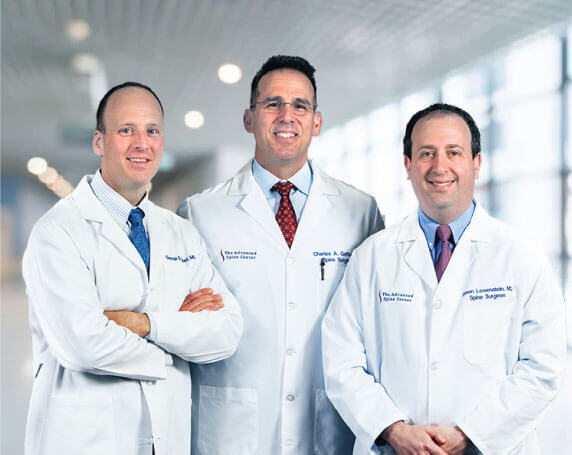
If you are having any of these symptoms, please contact our team of spinal stenosis doctors at The Advanced Spine Center to schedule an appointment. Dr. Jason E. Lowenstein, director of the spinal deformity center at Morristown Medical Center, specializes in treating complex spine conditions like spinal stenosis. Named one of Becker’s Spine Review‘s Top Spine Surgeons to Know in 2026, Dr. Lowenstein will work closely with you to develop a customized treatment plan that delivers long-term relief from your spinal stenosis symptoms.
What Our Patients Are Saying
I’ve been seeing Dr Lowenstein for the past 3 years. He and his staff have been nothing but helpful and I get returned calls right away. I highly recommend Dr Lowenstein and his staff.
-Elisabeth H. ⭐️⭐️⭐️⭐️⭐️
Dr. Lowenstein and team are true professionals. Extremely well versed in overall spine care knowledge. Great experience, never rushed during office visits. I highly recommend this team. You will not be disappointed with their overall care, compassion and direction for your needs.
-Anthony F. ⭐️⭐️⭐️⭐️⭐️
I’ve been a runner for 30 years, I saw Dr Lowenstein in debilitating pain, he told me the root of the problem was I needed a spinal fusion to stabilize my spine, I trusted him, and I am 4 months post surgery pain free! Thank you Dr Lowenstein, you gave me my life back!
-Kathy S. ⭐️⭐️⭐️⭐️⭐️
What Causes Spinal Stenosis?
Understanding the cause of your spinal stenosis helps guide treatment decisions. Most cases develop gradually, but several different conditions can narrow the spinal canal:
- Degenerative Spinal Stenosis: The most common form, caused by age-related wear and tear. Arthritis in the facet joints, bone spurs, and thickening of the ligament along the back of the spinal canal slowly reduce the space available for nerves, typically affecting adults over 50.
- Disc-Related Stenosis: Bulging or herniated discs can push into the spinal canal or foramina, narrowing the space suddenly or adding to existing degeneration.
- Congenital Spinal Stenosis: Some people are born with a naturally narrow spinal canal, which can lead to symptoms earlier in life.
- Spondylolisthesis-Related Stenosis: When one vertebra slips forward over another, the canal shifts out of alignment and can compress your nerves, causing chronic pain.
- Traumatic Spinal Stenosis: Fractures and injuries from car accidents, falls, or sports can leave bone fragments or swelling that narrow the spinal canal. Physically demanding work in fields such as construction, nursing, and athletics places years of extra strain on the spine and may speed up degenerative changes.
Uncovering the specific type and cause of your spinal stenosis helps our New Jersey spine specialists develop the most effective treatment strategy for your specific situation.
Curious to see if spinal stenosis and foraminal narrowing are causing your back, leg, or neck pain? Our team of award-winning Top Doctors includes past recipients of NJ’s Favorite Kid Doctors & The Patient’s Choice awards. Equally committed to surgical excellence and compassionate care, our fellowship-trained surgeons design a variety of surgical
Minimally Invasive Surgery for Spinal Stenosis in New Jersey
When surgical treatment is necessary, our spinal stenosis specialists utilize advanced minimally invasive techniques whenever possible. These innovative approaches offer significant advantages over traditional open surgery:
- Smaller Incisions – Reduced scarring and better cosmetic outcomes
- Faster Recovery – Shorter hospital stays and quicker return to activities
- Less Pain – Reduced post-operative discomfort and medication needs
- Better Outcomes – Excellent correction with preserved mobility
Our fellowship-trained surgeons have extensive experience in minimally invasive spine surgery, having performed thousands of successful procedures. We stay current with the latest surgical innovations to provide our patients with the best possible outcomes.
Why Choose Us for Advanced Spine Care
The Advanced Spine Center in New Jersey is recognized as a leading destination for spine treatment in the nation. Patients choose us for their spine treatment because we offer:

Comprehensive Care
From initial evaluation to post-surgical care, we provide complete spine care. Our multidisciplinary team ensures optimal outcomes for every patient.
Advanced Technology
State-of-the-art imaging, surgical navigation systems, and minimally invasive instruments enable precise, safe spine care with excellent results.
Convenient Location
Easily accessible in New Jersey and New York , our modern facility provides comfortable care in a convenient location. Plus, patients from across the nation, and even world wide, find come to us!
Frequently Asked Questions About Spinal Stenosis in New Jersey
Surgery is typically recommended when nonsurgical treatments no longer provide adequate relief, when pain limits how far you can walk or stand, or when weakness, numbness, or balance problems are progressing. Contact the team in our Morristown, Rockaway, or Bridgewater spine clinics today for a thorough assessment and evaluation of your condition.
Recovery time varies depending on the type of surgery and individual factors. Many patients in our New Jersey spine clinics return to desk work within a few weeks after a minimally invasive decompression, while a decompression with fusion may require three to six months for full recovery.
Yes, spinal stenosis can progress over time because the age-related changes that cause it continue. Progression is usually gradual, and regular monitoring by one of our New Jersey spine specialists can help catch changes in walking distance, strength, or balance before they affect your independence.
No single painkiller works best for everyone with spinal stenosis. Over-the-counter anti-inflammatories such as ibuprofen or naproxen, or acetaminophen, are usually tried first. Prescription nerve pain medications may help with burning or tingling, and epidural steroid injections can calm a flare.
Ready to Take the Next Step in Your Spine Care?
Don’t let spinal stenosis pain limit your life. Contact the leading spine specialists in NJ & NY today!