
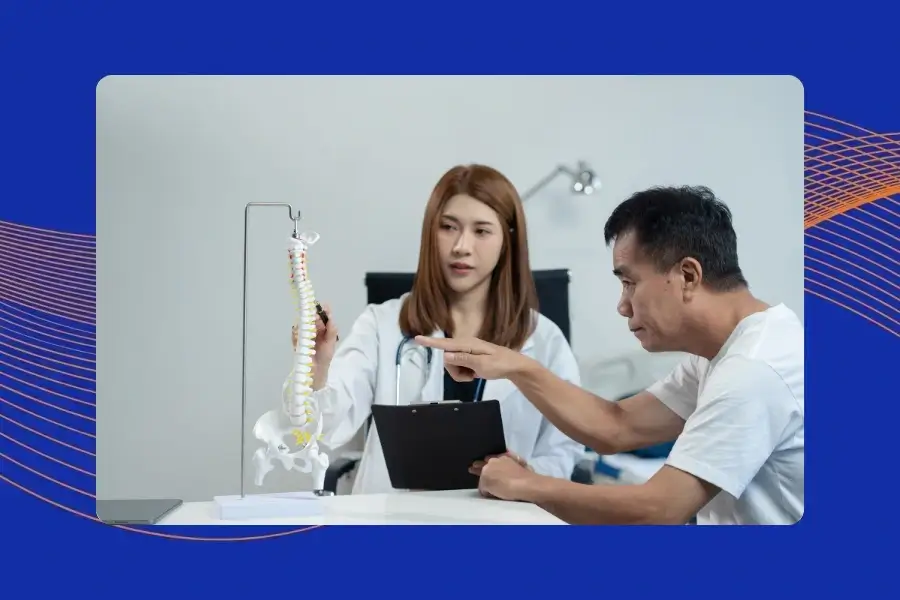
According to recent research, microdiscectomy procedures are typically highly successful, with microdiscectomy success rates ranging from approximately 78%-95% after one to two years following surgery. However, a successful microdiscectomy outcome does not necessarily mean every symptom disappears completely.
A microdiscectomy removes disc material pressing on a spinal nerve. The procedure is primarily used to relieve nerve-related pain that travels from the lower back into your legs or from your neck area into your arms. The right approach depends on where the disc problem occurs and which nerves are affected. At The Advanced Spine Center in New Jersey, our spine specialists can help you understand which symptoms surgery is intended to improve and what to expect during your long-term recovery from a microdiscectomy.
Understanding Microdiscectomy Success Rates for New Jersey Patients
Spine specialists and researchers measure microdiscectomy success in different ways, including overall pain relief, improved mobility, reduced disability, and patient satisfaction. For many New Jersey-area patients, success might mean sleeping through the night, walking more comfortably, or getting through a workday without constantly changing position.
Different symptoms may respond differently to surgery, including:
- Radiating leg pain: This is a primary treatment target when a herniated disc compresses the corresponding spinal nerve.
- Back pain: Discomfort in the lower back may have other causes that microdiscectomy will not address.
- Numbness and weakness: These symptoms may take longer to improve than pain and sometimes remain after surgery. Expected recovery also differs between cervical and lumbar disc procedures.
While overall success rates provide a broad picture, real-world recovery is deeply personal and varies depending on the specific symptoms you experience. Radiating leg pain often improves rapidly once nerve pressure is relieved, whereas lower back pain, numbness, and motor weakness follow distinct recovery timelines and may heal more gradually.
Understanding these distinctions helps set realistic expectations for your daily life, whether that means resting without pain, moving with confidence, or working comfortably.
Lumbar Microdiscectomy vs. Cervical Microdiscectomy Outcomes
Long-term results of microdiscectomy depend largely on whether you had a lumbar microdiscectomy or a cervical microdiscectomy. While both conditions stem from disc herniation compressing spinal nerves, cervical and lumbar procedures address entirely different areas of your body. Understanding how outcomes vary between lower back and neck surgeries is essential for setting realistic expectations and choosing the right treatment.
Lumbar Microdiscectomy Success Rates & Long-Term Outcomes
Lumbar microdiscectomy removes a fragment of a herniated disc in the lower back that is pressing on a nerve. This compression may cause pain through the buttock and leg, sometimes alongside tingling, numbness or weakness. Most of the disc remains in place, and relief is generally more predictable for radiating leg pain than for back pain alone.
When evaluated specifically for radiating leg pain (sciatica), lumbar disc herniation surgery like microdiscectomy demonstrates high success rates, with 80% to 90% of patients experiencing significant pain relief and improved mobility. Most individuals notice immediate or rapid reduction in leg pain following surgery, whereas weakness and numbness may take several months to resolve as the compressed nerve heals.
Cervical Microdiscectomy Success Rates & Long-Term Outcomes
Cervical spine procedures carry particularly high success rates, with 90% to 95% of patients reporting substantial relief from severe arm pain (radiculopathy) and significant functional recovery. Radiation of pain into the shoulder, arm, or fingers typically improves rapidly after decompression. However, neurological recovery from persistent numbness or muscle weakness often occurs more gradually over several months as the nerve root heals. Long-term outcomes are exceptionally stable, though surgical success varies slightly depending on whether the pressure is relieved using a posterior microdiscectomy, anterior discectomy with fusion (ACDF), or artificial disc replacement.
Whether addressing sciatica in the lower back or arm pain originating in the neck, targeted surgical intervention offers significant relief when matched correctly to the underlying issue. Partnering with a board-certified spine specialist allows you to review evidence-based outcomes tailored to your diagnosis, ensuring you enter treatment with a clear understanding of your likely recovery trajectory.
How Long Do Microdiscectomy Results Last?
For many patients, a microdiscectomy can provide life-changing pain relief that lasts for years. In one landmark study, successful outcomes were reported in 91% of cases at six months and 83% at 10 years after a microdiscectomy.
Long-term relief also depends on what happens after surgery. A disc can herniate again, and some patients continue to experience symptoms because a nerve has not fully recovered.
Pain relief and nerve recovery do not always happen at the same pace. Leg pain may improve relatively quickly, while numbness or weakness takes longer to settle. Some changes in sensation may remain. You might find that walking is much more comfortable after surgery but still notice tingling in your foot. That symptom alone does not establish that the procedure has failed.
If you’re experiencing lingering issues long after your microdiscectomy procedure, contact our award-winning New Jersey spine specialists today for a thorough assessment of your pain, strength, sensation, and recovery progress.
Microdiscectomy Recurrence and Returning Symptoms
Unfortunately, there are cases where painful symptoms can return following a microdiscectomy. One recent study saw estimates for recurrence after microdiscectomy surgery ranging from approximately 3% to 24%. Factors such as your disc condition and surgical history may impact the possibility of your symptoms recurring over time.
Returning symptoms do not automatically mean the disc has herniated again. Persistent pain may also reflect ongoing nerve compression or incomplete nerve recovery. An assessment in one of our regional New Jersey spine clinics can help identify the likely cause before further treatment is recommended.
Whether or not you need another microdiscectomy procedure depends on the findings of a thorough examination and the result of any subsequent treatments like physical therapy and rehabilitation, medication, or even revision spine surgery. Another microdiscectomy may be an option for some recurrent disc herniations. Factors such as spinal instability, back pain, alignment, and previous herniations help guide the recommendation for treatment.
Planning Your Recovery from Microdiscectomy Surgery
It’s natural to want to resume your normal life and daily activities soon after having minimally invasive surgery like a microdiscectomy. However, planning your immediate and long-term recovery before surgery can make the process easier and improve your chances of success.
Arrange help with groceries, childcare, and tasks that involve heavy lifting. Discuss driving, work, and exercise restrictions with your family and medical provider, then follow your microdiscectomy recovery plan as you return to normal activities. Feeling less pain does not automatically mean you are ready for strenuous exercise or unrestricted lifting, so be sure to consult a spine specialist near you if you are experiencing any additional symptoms following your microdiscectomy procedure.
You should always seek medical care immediately if pain worsens significantly, numbness in the saddle area increases, new weakness develops, or you experience a loss of bladder or bowel control.
Get Expert Advice & Microdiscectomy Surgery in New Jersey & Beyond
Living with persistent pain, numbness, or weakness, especially after having surgery like a microdiscectomy, shouldn’t be your normal. At The Advanced Spine Center, our team understands microdiscectomy long-term outcomes and provides expert, compassionate spine care for patients throughout Morristown, Bridgewater, Rockaway, and surrounding New Jersey communities. We understand that finding the right treatment is a major decision, and we are dedicated to helping you make informed, confident choices about your health.
Schedule an appointment with our team of spine experts today to discuss whether you are a candidate for a microdiscectomy or if another procedure may be appropriate for your condition.