
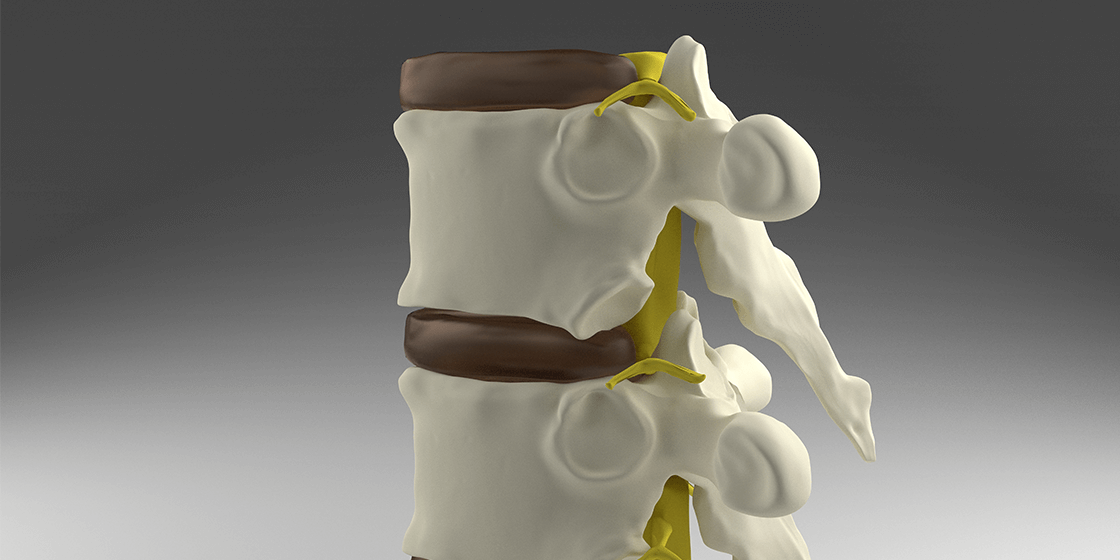
As we age, so do the structures within our body. The spinal cord is no exception to this rule. And, age-related degeneration may manifest in a variety of different ways. One of the most common spinal cord ailments from age-related wear and tear is a condition called spinal stenosis. Spinal stenosis describes the narrowing of the spaces surrounding the spinal cord. In many cases, this causes no symptoms at all. However, more severe instances of this condition will result in uncomfortable experiences for patients.
As time goes on, spinal ligaments swell in size, become stiff, and lose their normal levels of flexibility. This structural deterioration reduces the amount of space available around the spinal canal, which may apply pressure on nearby nerve roots or even on the spinal cord itself. This is what causes painful symptoms associated with spinal stenosis. Usually, these symptoms only manifest in patients over the age of 60. But, it is certainly possible for younger patients to experience pain and discomfort from spinal stenosis.
Luckily, advancements in modern medicine have provided us with plenty of viable treatments for patients who suffer from spinal stenosis. There are plenty of conservative treatments, as well as minimally invasive surgical procedures available for patients with the condition. If you are experiencing lasting discomfort in your back, or even other areas of the body such as your extremities, consider seeking medical attention for your ailments.
What Is the Most Common Cause of Spinal Stenosis?
The most common cause of spinal stenosis is age related degeneration, sometimes called wear and tear changes in the spine. Over time, arthritis can contribute to bone spurs, discs may lose height or bulge, and ligaments can thicken. These changes can reduce space around the spinal cord or spinal nerves.
Not everyone with age related changes develops symptoms. Symptoms often appear when narrowing begins to irritate or compress nerves. The location of narrowing also matters. Lumbar stenosis affects the lower back and may cause leg symptoms. Cervical stenosis affects the neck and may cause symptoms in the arms, hands, legs, balance, or walking.
That being said, here are some of the most common causes of spinal stenosis:
- Disc Herniation: Spinal discs are soft cushions that function as shock absorbers between the bones of the spine. As we age, discs can dry out or weaken. The soft interior may bulge or leak through the outer layer and press on the spinal cord or nearby nerves.
- Bone Overgrowth: Arthritis in the spine can lead to extra bone forming at the edges of joints. These bone spurs may narrow the spinal canal or the openings where nerves exit and can press on nearby nerves.
- Tumors:These are much less common. When they do occur, they may grow inside the spinal canal or between the vertebrae and place pressure on spinal nerves.
- Traumatic Injuries: Injuries from contact sports, falls, or automobile collisions can damage bones, discs, and ligaments. Swelling, fractures, or changes in alignment may narrow spaces in the spine and irritate nearby nerves.
- Ligament Swelling: Ligaments help support the spine. As we age, they can become thicker and less flexible. Thickened ligaments may narrow the spinal canal and press on the spinal cord or nerves.
What Is the Best Thing to Do for Spinal Stenosis and What Should You Avoid?
The best next step depends on your symptoms, the part of the spine affected, and whether nerves are under pressure. If pain, numbness, weakness, or walking difficulty is affecting your routine, request an appointment with the spine specialists near you in New Jersey to get to the bottom of your back pain.
Many people benefit from a personalized plan that may include activity changes, physical therapy, medication when appropriate, or other non surgical treatment. The goal is usually to manage symptoms, protect mobility, and help you continue with daily activities as safely and comfortably as possible.
What to Do If You Have Spinal Stenosis
- Stay gently active within your comfort level unless a spine specialistl has advised otherwise. Short walks or light activity often help more than complete rest.
- Take regular breaks from positions or tasks that worsen pain, such as prolonged standing, bending, or sitting. Small changes in posture and routine can reduce flare ups.
- Keep track of symptoms including leg pain, numbness, weakness, balance changes, and how far you can walk before symptoms start. This information helps guide care decisions.
- Contact a healthcare professional if symptoms persist, worsen, or begin affecting your daily life, work, or usual activities.
What to Avoid
- Avoid pushing through sharp, worsening, or radiating pain. Repeatedly forcing through strong symptoms can aggravate irritated nerves.
- Avoid returning to heavy lifting, repetitive twisting, or high impact activity too quickly if these consistently trigger symptoms. Ask for guidance on how and when to build back up.
- Avoid relying on self treatment alone when you have progressive weakness, changes in balance, or increasing difficulty walking. These changes often need specialist input.
- Avoid ignoring new bladder or bowel changes, numbness around the groin or buttocks, or sudden severe weakness. These symptoms need urgent medical assessment.
To put it into perspective, a person whose leg discomfort occurs only after standing for a long period may benefit from simple activity adjustments, posture changes, and a targeted rehabilitation plan. These steps can often improve walking distance and reduce leg pain.
A person who develops worsening weakness, difficulty walking, or bladder or bowel changes needs prompt medical attention. In this situation, the priority is to assess nerve function quickly.
How is Spinal Stenosis Diagnosed?
As with most cases, diagnosis for any medical condition usually starts with an overview of medical history and a physical examination. Your the spinal specialist may ask you questions about your family history, pre-existing medical conditions, your history of injuries, and more. This information gives your doctor a place to start when it comes to ordering diagnostic tests. This information given to you by a spinal specialist is a good place to start when it comes to ordering diagnostic tests. For spinal stenosis, your spinal specialist may take the following routes for determining a diagnosis:
- X-Rays: X-rays are useful because they help reveal bone abnormalities and deformities. This is especially useful in patients who have osteoarthritis or bone spurs, as it will show where these structures press on nearby nerves or the spinal cord.
- CT Scan: Usually, the spinal specialist will order these in lieu of an MRI, as not all patients are viable candidates for magnetic resonance imaging. CT scans are interesting, as they use a series of x-ray images taken from different angles to produce more detailed images of the affected area(s). Usually, this test takes advantage of contrast dyes, which helps to outline structures and reveal abnormalities such as herniated discs and tumors.
- MRI: Not everyone is eligible for an MRI, as it uses powerful magnets and radio waves to produce highly detailed images of spinal structures. This is a very extensive test. It is even able to detect damage to the discs and ligaments. Additionally, it will also reveal the existence of tumors within the spine. Not only that, but it will also show which spinal nerves are under pressure, an invaluable diagnostic tool.
Spinal Stenosis Treatment
As with any medical condition, treatments usually diverge into conservative options and surgery. There is, however, a middle ground where minimally invasive surgeries do reside. For some, these are viable treatment routes in cases where conservative methods are not enough, but traditional open surgery is not necessary or desired. It all depends on the severity of your case and the nature of your condition.
Conservative Treatments
Treatment for spinal stenosis depends on the cause, symptoms, overall health, and how much the condition affects daily life. Many people begin with non surgical care, which may include activity modification, physical therapy, and medication to help manage symptoms when appropriate.
A healthcare professional can advise whether pain medication, anti inflammatory medication, or another option is suitable based on your health history and current medications. In some cases, injections may be considered to help manage pain or inflammation, although results vary and relief may be temporary.
Physical therapy is great for those with spinal stenosis, as many patients with the condition are less active in an attempt to avoid painful symptoms. Less activity results in muscle weakness, which may actually exacerbate the condition. A physical therapist or spine specialist can help identify movements and exercises that are appropriate for your symptoms and mobility level.
Steroid injections are another effective form of treatment, however, they are not permanent and don’t work for everyone. That said, they may be helpful in situations in which the nerve roots are swollen and pinched. This is because steroid injections help to reduce inflammation and, as a result, alleviate some of the condition’s painful symptoms.
When Might Surgery Be Considered?
As with any medical condition, treatments usually diverge into conservative options and surgery. There is, however, a middle ground where minimally invasive surgeries do reside. For some, these are viable treatment routes in cases where conservative methods are not enough, but traditional open surgery is not necessary or desired. It all depends on the severity of your case and the nature of your condition.
Regardless of what your needs may be, here are some common surgical procedures that doctors perform for spinal stenosis:
- Laminectomy: This specific procedure involves the removal of the affected vertebra’s lamina. Doing so helps to alleviate the pressure on nearby nerves via the creation of more space through the removal of this structure.
- Laminotomy: This is similar to laminectomy, but instead of removing the entire structure, the spinal specialist only extracts a small portion. Usually, the spinal specialists accomplish this by drilling a small hole just to relieve pressure in the affected area.
- Laminoplasty: This surgery is unique as the spinal specialists only perform it in the cervical spine. Basically, the spinal specialists create extra space in the spine by creating a hinge with the lamina. Then, the spinal specialist will use hardware to close gaps in the newly opened area.
Get Help for Spinal Stenosis Symptoms
Spinal stenosis symptoms can range from mild discomfort to pain, numbness, weakness, or difficulty walking that interferes with everyday life. If your symptoms are persistent, getting worse, or limiting what you can do, a spine assessment can help identify the cause and appropriate next steps.
Advanced Spine Center provides evaluations and treatment planning for patients with spinal stenosis in New Jersey. Schedule an appointment with a spine specialist near you to discuss your symptoms and care options.
Updated Aug 26, 2026.