
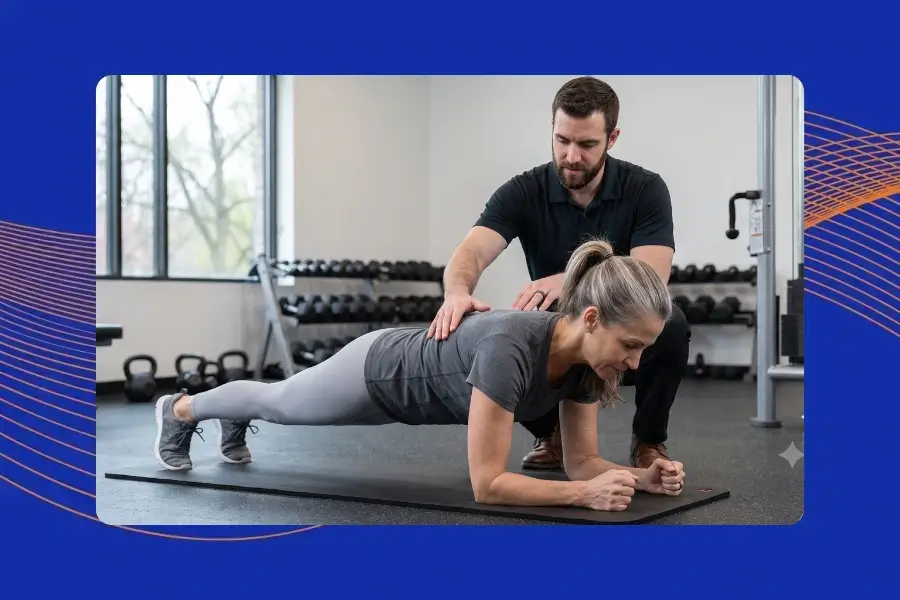
Living with scoliosis doesn’t mean you have to avoid strength training. In fact, the right exercises can improve core stability, reduce muscle fatigue, and make everyday activities feel easier. While strength training won’t straighten a structural spinal curve, it can play an important role in managing symptoms.
For many patients in Morristown, Bridgewater, and Rockaway, NJ, a personalized strengthening program is one of the first steps in scoliosis care. As strength improves, many people find that everyday activities become easier and less tiring, and they’re able to stay active with fewer painful episodes.
Who Is Strength Training for Scoliosis Best For?
Strength training is most appropriate for people who have mild to moderate scoliosis and want to improve strength, reduce discomfort, or maintain mobility.
You may benefit from a supervised strengthening program if you:
- Have mild scoliosis with occasional back pain.
- Feel muscle fatigue after standing or sitting for long periods.
- Want to improve posture and core stability.
- Have been advised by your healthcare provider to pursue conservative treatment.
Strength training is not a substitute for medical care if your spinal curve continues to worsen, pain becomes severe, or neurological symptoms such as numbness, tingling, or weakness develop. Those symptoms require prompt evaluation by a spine specialist.
How Does Strength Training Help People with Scoliosis?
Strength training doesn’t change the shape of your spine, but it can change how your body supports it. When the muscles around your spine, hips, and core become stronger, they do a better job of supporting your posture and reducing unnecessary strain.
As your muscles become stronger, you may notice better posture, improved endurance, and less fatigue during everyday activities. Building strength around the spine can also reduce muscle imbalances that contribute to discomfort, while stretching alongside strengthening exercises helps maintain flexibility.
Some people also find that better posture makes breathing feel more comfortable by allowing the chest to expand more easily. Exercise won’t change the spinal curve itself, but it can improve how the body moves.
For example, someone who spends the day working on their feet may notice they aren’t as tired by the end of a shift after several weeks of consistent strength training.
The Society on Scoliosis Orthopaedic and Rehabilitation Treatment (SOSORT) recommends exercise as part of conservative scoliosis management because it improves function and quality of life, even though it does not correct the spinal curve.
Research also suggests that scoliosis-specific SEAS (Scientific Exercise Approach to Scoliosis) programs may help stabilize spinal curves in some adults who choose conservative treatment, while also improving symptoms and day‑to‑day function.
What Strength Training Exercises Are Good for Scoliosis?
The best exercises depend on the shape of your spinal curve, your symptoms, and your overall fitness level. Rather than focusing on lifting the heaviest weight possible, the goal is to build strength with good technique and controlled movement.
Most strengthening programs include core stability exercises such as bird dogs, dead bugs, and modified planks to improve spinal support. Glute exercises like bridges and hip thrusts help stabilize the pelvis, while resistance band rows and pull-aparts strengthen the upper back and encourage better posture. Lower body exercises, including squats, step-ups, and wall sits, can also be beneficial when performed with proper alignment.
Exercises to Avoid If You Have Scoliosis Pain
Having scoliosis doesn’t automatically rule out weight training. Some people continue lifting safely for years with the right technique and a program that’s suited to their condition. The exercises that need the most caution are usually those that place excessive stress on the spine or cause symptoms to flare up.
These may include:
- Heavy overhead presses that compress the spine under load.
- Barbell back squats or deadlifts performed with excessive weight or poor form.
- High-impact exercises such as box jumps if they aggravate symptoms.
- Repetitive twisting movements using heavy resistance.
- Any exercise that causes sharp pain, numbness, tingling, or weakness.
In some cases, people with scoliosis can still perform compound lifts safely with proper technique, gradual progression, and appropriate supervision. If you’re unsure whether an exercise is appropriate, ask!
Starting a Strength Training Program For Scoliosis Pain
One of the biggest mistakes people make is trying to progress too quickly. It’s better to master good movement first and let strength develop over time than to rush into heavier weights.
Most people begin with bodyweight exercises to improve posture and movement control before adding core stability work. Once those movements feel comfortable, resistance bands or light dumbbells can be introduced. From there, resistance can gradually increase, provided your technique stays consistent and your symptoms remain well controlled.
Some muscle soreness after exercise is normal. Increasing back pain, new numbness, tingling, or weakness is not and should be assessed by a healthcare professional.
Can Strength Training Stop Scoliosis from Getting Worse?
Strength training can improve strength, posture, and everyday function, but it can’t prevent scoliosis from progressing in every person.
The good news is that most people with mild scoliosis don’t need to stop being active. They just need a program that’s appropriate for their spine.
Whether scoliosis progresses depends on several factors, including your age, the size of the curve, skeletal maturity, and the underlying cause of the condition. Exercise can improve strength, posture, and day-to-day function, but regular follow-up appointments remain important so your spine can be monitored over time.
Strength Training Vs Surgery for Scoliosis Care
Strength training and surgery play very different roles in scoliosis care. Exercise focuses on supporting the spine and reducing symptoms, while scoliosis surgery is reserved for curves that are severe, unstable, or clearly progressing despite conservative treatment.
| Strength Training | Scoliosis Surgery |
| Improves strength and posture | Corrects structural spinal deformity when appropriate |
| Helps reduce pain for many patients | Often recommended for severe or progressive curves |
| Supports daily function | Addresses instability or significant spinal imbalance |
| Does not straighten the spine | Can improve alignment and quality of life for eligible patients |
For most people, conservative treatment is the first step. Surgery is generally considered only when symptoms continue to worsen or the spinal curve progresses despite appropriate non-surgical care.
When Strength Training Isn’t Enough for Scoliosis
Exercise helps many people manage scoliosis successfully, but there are times when strengthening alone isn’t enough. If your symptoms are changing or becoming harder to control, it’s important to be reassessed rather than simply pushing through the discomfort.
Arrange a spine evaluation if you notice:
- Your spinal curve appears to be progressing.
- Back pain becomes more frequent or severe.
- Pain continues despite following an exercise program.
- You develop numbness, tingling, or muscle weakness.
- Standing, walking, or everyday activities become increasingly difficult.
- You notice worsening posture or uneven shoulders and hips.
- Larger spinal curves begin affecting breathing or overall quality of life.
Meeting with a scoliosis specialist like Dr. Jason Lowenstein, does not automatically mean surgery is necessary. Many patients benefit from continued monitoring or additional non-surgical treatment. If imaging shows that the curve is progressing or symptoms continue to worsen despite conservative care, scoliosis surgery may provide the best long-term solution.
Where Can You Find Expert Scoliosis Care in New Jersey?
For many people with scoliosis, strength training is an important part of managing symptoms and maintaining an active lifestyle. If your symptoms continue to worsen or your spinal curve progresses despite exercise, it’s time to explore your treatment options with a spine specialist.
At The Advanced Spine Center, our specialists work with patients from Morristown, Bridgewater, Rockaway, the surrounding New Jersey communities, and even nationwide to create treatment plans based on their symptoms, imaging results, and long-term goals. Whether you need reassurance that your current approach is working or want to explore additional treatment options, a specialist evaluation can help you make an informed decision about what comes next.
Request an appointment with The Advanced Spine Center to discuss the treatment plan that’s right for you.