
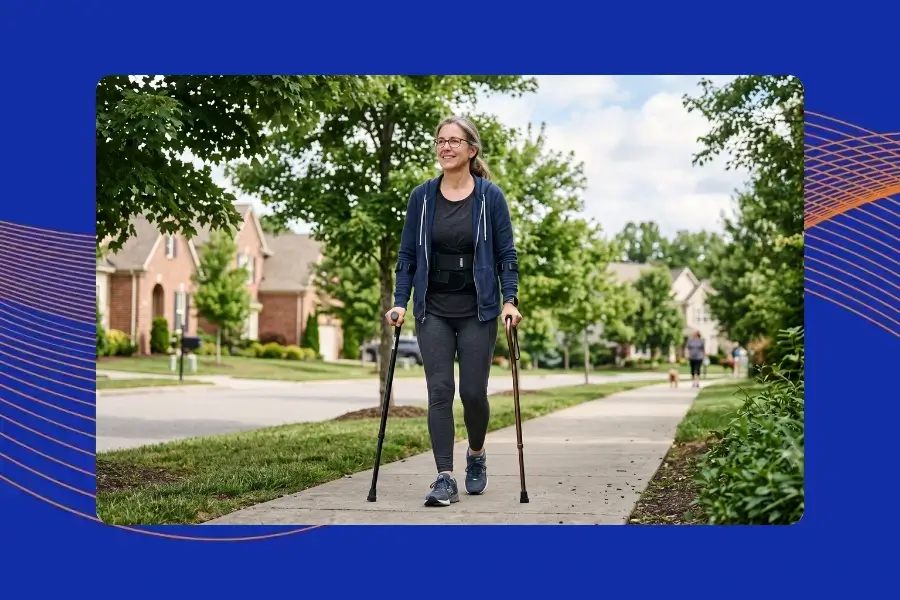
While every person’s healing journey is different, recovery after a microdiscectomy is often quicker than many people expect. Most patients are walking the same day, return to light daily activities within one to two weeks, begin physical therapy around four to six weeks and resume most normal activities within three to six months. Although recovery looks different for everyone, a study published in the National Library of Medicine shows that 78% to 95% of patients experience significant long-term relief, making this one of the most successful procedures for relieving nerve pain.
For patients in Morristown, Bridgewater and Rockaway, NJ, a microdiscectomy surgery is performed to relieve pressure on a compressed spinal nerve, often bringing rapid relief from leg pain caused by a herniated disc. While many people notice improvements quickly, recovery is still a gradual process. Knowing what to expect at each stage can help take some of the uncertainty out of recovery, protect your healing spine and give you the confidence to move forward one step at a time.
Phases of Microdiscectomy Recovery
The microdiscectomy recovery timeline moves through five functional phases, starting with immediate walking on the day of surgery and finishing with unrestricted athletic activity around month 6.
Days 0 to 7: Microdiscectomy Recovery Care and Early Walking
During the first week, the focus is on pain control, caring for the incision and getting your body moving again through short, gentle walks. Short, frequent walks around the house, typically 5 to 10 minutes every couple of hours, help improve circulation, reduce the risk of blood clots and encourage the healing nerve to move freely through the surrounding tissue.
Protecting your spine is especially important in this first week. The BLT rule usually applies: no bending at the waist, no lifting anything heavier than about ten pounds and no twisting through the torso, all to keep extra pressure off the healing disc.
Weeks 2 to 4: Post-Microdiscectomy Mobility and Returning to Work
Many people begin feeling more like themselves again during this stage. Although your back is still healing, everyday routines often feel a little less daunting, making this an encouraging milestone in the microdiscectomy recovery timeline.
If you have a desk-based job, a gradual return to work is often possible during this stage. Taking regular standing or walking breaks and maintaining good posture can help reduce stiffness throughout the day. Walking tolerance typically increases during this stage, with many people progressing to 15 to 20 minutes twice a day, depending on their comfort and their surgeon’s guidance.
Some movements still need protecting. Bending, lifting more than about ten pounds and twisting are usually kept off limits for now, to give the healing disc the calm, stable environment it needs to keep recovering without extra strain.
Weeks 4 to 6: Physical Therapy and Core Strength for Microdiscectomy Recovery
By weeks 4 to 6, many patients begin formal physical therapy once their spine specialist confirms healing is progressing as expected. Rather than pushing through discomfort, therapy focuses on helping you move with confidence while rebuilding strength and stability.
In these sessions, your therapist will work with you on core strength and stability so your muscles can better support your spine. Exercises may include deep abdominal activation, pelvic stability work, gentle hamstring stretches and posture training.
Months 2 to 3: Activity Clearance and Light Exercise During Microdiscectomy Recovery
Between months 2 and 3, everyday activities become easier as strength, endurance and confidence continue to improve. It’s also common to feel tempted to do more because you’re feeling better. Continuing to build activity steadily helps protect the healing disc and lowers the risk of setbacks.
You may be cleared to lift light everyday items again, such as groceries, a laundry basket or a small child, provided you squat rather than bend at the waist. People with moderately physical jobs may also begin returning to work during this stage, provided their microdiscectomy recovery is progressing well. Longer periods of standing and light manual tasks are often introduced over time.
Exercise options also expand during this stage. Low-impact cardio like a stationary bike, an elliptical machine or gentle lap swimming with a light flutter kick can help you rebuild stamina without jolting the healing spine. High-impact activities still need to wait.
Months 3 to 6: Long Term Microdiscectomy Nerve Healing and Full Recovery
Between 3 and 6 months after a microdiscectomy, healing continues even if you already feel much better. Nerves recover more slowly than skin or muscle, so it’s completely normal for numbness, tingling or mild weakness to improve gradually rather than disappear overnight.
Around the 6-month mark, many patients have returned to their usual daily activities and, if healing is progressing well, may be cleared for higher-impact exercise such as running, heavier lifting or competitive sports.
How Does Microdiscectomy Recovery Compare to Other Minimally Invasive Outpatient Spine Surgeries
If you’ve been researching spine surgery, you’ve probably noticed that recovery timelines vary depending on the procedure. One reason microdiscectomy recovery is often quicker is that the surgery is minimally invasive so it relieves pressure on the nerve without significantly changing the structure of the spine.
This recovery pattern also differs from other minimally invasive spine procedures because the primary goal is nerve decompression rather than reconstructing or stabilising the spine. For example, an artificial disc replacement recovery timeline involves protecting and retraining a moving joint, so its rehab often has more defined phases and specific motion guidelines.
Because your natural spinal mechanics and joint structures are left largely intact with microdiscectomy, stiffness after surgery is usually limited. Many patients follow a more streamlined path back to everyday life, without long periods in rigid braces or strict bed rest.
When To Call Your Spine Surgeon During Microdiscectomy Recovery
Most people recover without any major complications. Even so, knowing which symptoms are part of normal healing and which need medical attention can help you feel more confident during recovery. You should contact your surgical team right away if you notice:
- Sudden, severe leg pain or a sharp increase in pain
- Increasing leg weakness or difficulty walking
- A fever over 101 degrees Fahrenheit
- Any fluid leaking from your incision
The key is learning to tell the difference between expected healing and warning signs. If something doesn’t feel right, it’s always worth contacting your surgical team so they can determine whether your symptoms are part of normal healing or need further evaluation.
Leading Microdiscectomy & Recovery Care in Morristown Bridgewater and Rockaway New Jersey
The Advanced Spine Center cares for patients across three New Jersey locations, in Morristown, Bridgewater and Rockaway. Having options spread across the region makes it easier to keep follow-up visits manageable while you heal.
At every location, the board-certified spine surgeons at The Advanced Spine Center guide patients through every stage of recovery, with recovery plans tailored to their lifestyle, work and long-term goals.
Preparing for spine surgery is a big decision, and having the right information can make the process feel much less overwhelming. You don’t have to navigate recovery on your own. If you have questions about whether a microdiscectomy is right for you or what recovery could look like in your specific situation, the board-certified spine surgeons at The Advanced Spine Center are here to help. Request an appointment at the location that’s most convenient for you.